
“This deck is a deep intellectual design that seeks to use the forces of Orzhov to manipulate my opponents into destroying each other.” Please, don’t lie to yourself. This isn’t really what you’re touting yourself to be.

You pick up this deck, you read the description that Wizards gives you, and you think of yourself as some laid back light novel protagonist who is quietly disrupting and manipulating the actions of the table from the shadows.
Your fictional biography probably reads like this:
While all the other children were busy watching Teletubbies, I was learning from behind, studying Caillou, observing and recognizing his patterns of calculated chaos. In middle school, I purposely sat by the window at the back of the class, analyzing my fellow classmates while practising absorbing aura. They invited me to social outings and for lunch, but I declined, using that precious time instead to recite the teachings of my influencer Youtubers as they prepared me for the adolescent struggle. In high school, I took on the guise of a loner, preferring to work alone and be away from others, as I manifested my main protagonist energy to accomplish all I needed, controlling the student council and using them as my pawns to fulfill my goals.

Nah, this is you. This is actually what you are. You’re just a plain evil dick looking to push others into killing each other while you’re just chilling on the side eating popcorn. I mean, once the proletariat class realizes that you, the bourgeois, is pitting them against each other, you’re probably more than likely dead. But that’s why we collectively work, own the means of production, and purposely seek to divide them with petty matters before they organize together. Through the ownership of state media and purchasing of bad actors, we can use propaganda and other tools to keep them working for us while we enjoy their fruits of labour.
I think the entire deck’s energy can be summarized very easily by Farquaad’s signature speech. Beautiful, isn’t it?

So, after that lengthy introduction, let’s get into the actual deck, shall we? Killian is an incredibly annoying creature for your opponents to deal with. Whenever an enchantment enters under your control, tap up to one creature and goad them. If a creature with an aura you control attached to it is attacking, you get to draw cards (both you or your opponents’ creatures). Killian may look like he’s got a lot going on, but a simplification of his deck design is you want many enchantments.
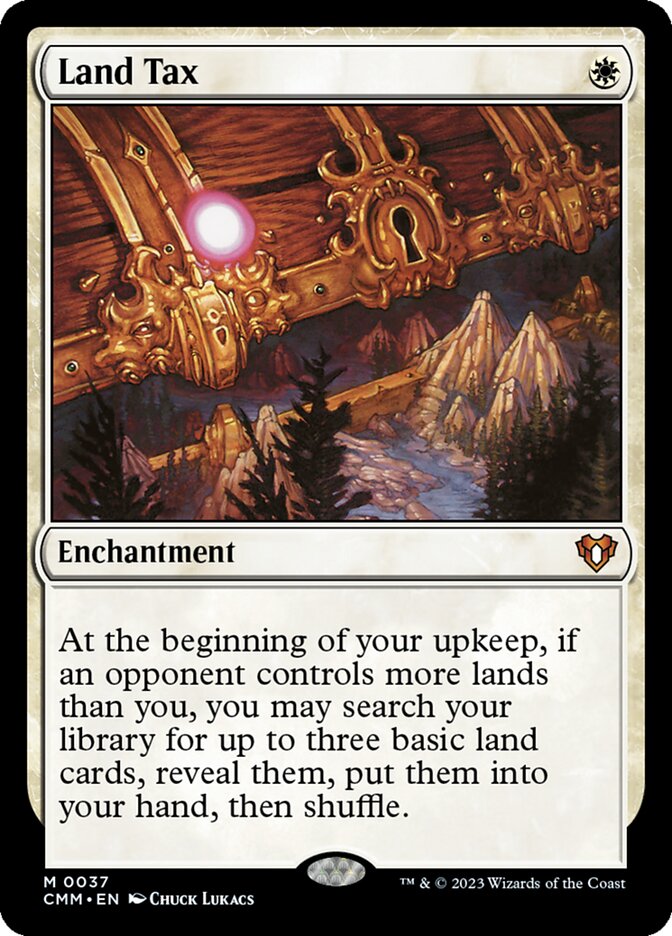


What the precon does quite well is supplying you with ample enchantments to help trigger Killian’s abilities. Furthermore, many of these enchantments are good on their own with or without Killian on the board, obviously better if he is. The auras in particular are excellent for manipulating your opponent’s creatures.


In terms of creatures, I’m also quite impressed. There are several enchantment creatures, perfect for their dual card typing that gives you a body and also acts as a trigger for Killian. However, we have far too many creatures that are all in multiple supportive directions. And there’s nothing wrong with that inherently. But between discounts, payoffs, and attack triggers, the question is: why not just run more enchantments instead? Of course, you also have the forced reprints here like Keen Duelist above.


None of these cards are bad. But, they do take the place of an enchantment you could have been casting instead. Each of them also requires certain other conditions to be met, and all of them want to be on board before you even begin casting your auras. Furthermore, Firemane Commando and Mangara, the Diplomat don’t actually stop others from swinging at your face by any measure. They just disincentivize others from doing so unlike a taxed lock like Ghostly Prison (also in the precon).


Killian exists in this weird duality. On one hand, you want to give gifts to your opponents to get them to kill each other. On the other hand, you are literally giving them advantages that may annoy them enough to actually kill you. You want to live on the divide itself, at the center point in which you are excessively annoying but your opponents would rather deal with each other first. And rather than trying to make them hate you more, why not incentivize them to hurt others for their own gain (other than you). Curses are great. They are enchantments that will trigger Killian, and on top of that, certain ones can be used as political tools.
Begging on your knees to not get slapped by a 10/10 isn’t really going to work, especially within my pods. However, if you tell your friend that slapping the player across from them instead gives them free creatures to do so more effectively next turn, that might change their decision. You want to be more like a backstreet dealer. People don’t necessarily trust you or like you to be honest, but you provide the goods, so they will have to listen.


Be a bit careful with what kind of evil you give your opponents. You really don’t want to generate heavy hate on yourself. Learn from the corporations around us. Don’t enshittify every product immediately, you want to train your consumers, provide small little rations of change slowly, and make them accustomed to it. Too much of this nonsense at once, and they’ll potentially start an uprising.


Ghostly Prison won’t always save your life. We are in 2026, and almost every deck and every deck should be, running some form of enchantment or artifact hate. Ghostly Prison will eventually be popped or popped early if your opponents dislike you enough. It’s hard to really convince others to not harm you when you’re potentially open board, been screwing with their permanents, and are an overall nuisance. But, if you are playing with barbed wires, then it may be less likely for them to focus upon you. The best of which is by offering “choices” to your opponents. Cards like the above can be open for discussion. All of which, if you opponents do remove from board, have very fun lasting effects (which can be targeted to them, depending on how they are nice to you).


Given the fact that Killian does tap creatures on entry of enchantments, you are heavily incentivized to also be able to play into his meddling-in-combat potential. And this is where I think Killian shines the most since you can really renegotiate the terms of combat. Since the entry trigger taps a creature, you can negotiate attacks in the favour of others in exchange for a trade. And having cards like the above having modular utility lets you also use these tools to benefit yourself and protect your own creatures and Killian himself if need be.
I think playing cheap annoying auras and the like are great ways to negotiate deals at the table and make for an engaging experience overall. Just be a little bit careful with how you negotiate.


Some other nice cards to consider are shown here. Minion’s Return can let you steal a potential threat or value piece. Swift Reconfiguration can transform any large swinging threat into a slightly weaker vehicle that your opponent will have to find a way to crew. Shardmage’s Rescue is an excellent protection spell at a very low cost. Remember that these spells all have flash and can be used during your opponent’s turns to negotiate as well.

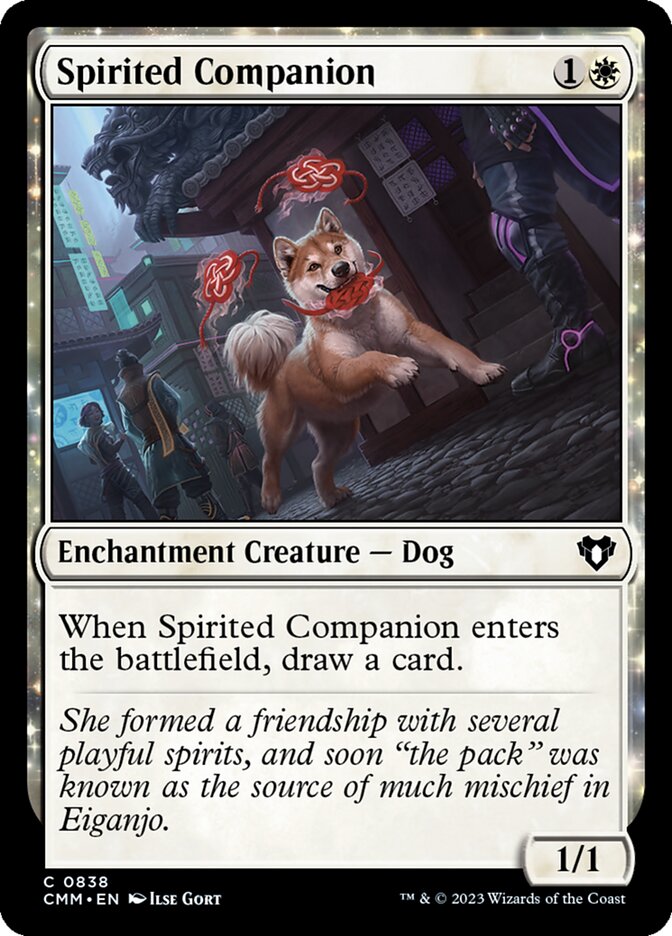
That’s why I don’t really see the direct need for Sram and even cards like Kor Spiritdancer. Don’t get me wrong, these are great cards and nice repeatable draw engines, but I think we have plenty of existing options that are enchantments and work directly in conjunction with our commander without needing a turn of set-up.


The same can apply to discounts for our enchantments. Sure, Transcendent Envoy only works for aura spells, but a good chunk of our enchantments are auras anyways. And, considering the general additions to this deck suggested here, many of the spells are already quite low on mana cost as is. Starfield Mystic is a decent option, but we can honestly trade him away for another enchantment. The enchantment creatures are always going to be superior simply due to how they perfectly synergize with Killian with or without their inherent abilities. The bottom line is that if you are running a non-enchantment creature, really question whether or not its abilities far supersede running an enchantment in its place, especially those that need an additional turn of set-up (e.g. cards with attack triggers).


For some more cool and useful enchantment creatures, we can begin with Aegis of the Gods which gives you targeted protection. Brain Maggot is essentially Thoughtseize on a body that doesn’t cost you two life. Demon’s of Fate Design gives you a free spell every turn and can also turn into a flying win-con if you pay and sacrifice enough enchantments.

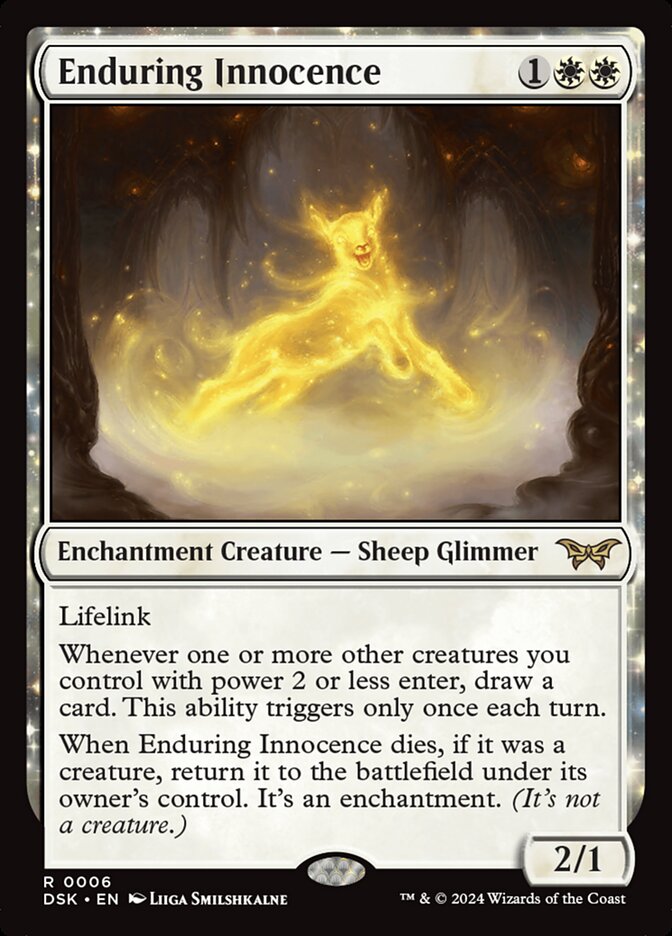

Eidolon of Obstruction hates planeswalkers; therefore, I like him. Enduring Innocence returns once more as a draw engine if you play a bunch of low powered creatures. Nightmare Shepherd gives all your creatures a second life if they do happen to die. Do note Enduring Innocence returning or Nightmare Shepherd’s token generations (for enchantment creatures) do count as enchantment entries for Killian.
I mean, if the game goes all according to plan, the game will essentially be the above with you as the crowd and your opponents as the two monkeys in the center. To close out the game, and since your opponent’s creatures will likely be tapped or decommissioned (you can also just play an enchantment to tap any remaining creatures), you can just swoop in and finish the job. I’m sure you’ve got some fun imaginations for some wonderful endgame spells. I’ll give some final suggestions and close out the post.


Okay, endgame is subjective. Boon of the Spirit Realm can definitely get there. Arvinox and Axis of Mortality are more of fun inclusions. Both of which can be used as fun political tools as well. You can also really complicate combat with Axis of Mortality, assuming no one removes it.

While stumbling and researching cards, I came across this gem. Is this really a curse? I feel like I would more so enchant this on myself and turn my 1/1 dorks and advantage engines into 3/3 beasts to actually make them into sizeable board threats. The creatures even keep their abilities.

In summary, with Killian, you’re the crack dealer lurking in the dark alleys at night. People will come to you for trades, and you always offer them sketchy deals that favour you more. While you trust them with the fun tools or “gifts” you grant them, you must always be ready for the kickback. Litter your board with sharpened sticks and pointed barbs because you never know when a deal goes bad and the cops are on their way. Otherwise, when your opponents are collectively bickering about how to coordinate damage, you can sit back in your chair with a bucket of popcorn, revelling in the very mayhem that you caused.