
In this deck tech, we’ll be looking and discussing how to modify the pre-constructed deck for Dina, Essence Brewer.

Before we dive into the deck itself, let’s have a conversation about the face commander above. This deck tech is focusing on Dina, and we’ll be building around her abilities. When we look at Dina, we see a decently sized legendary creature with two primary abilities. The first, which is the most important, gives us a free draw engine in our command zone. Dina suggests we build our deck in a way where we sacrifice creatures, ideally every turn, to continue to channel advantage overtime. Dina’s second ability is also quite interesting as Dina herself acts as a way to sacrifice creatures, granting you life, trigger her own first ability, and also giving power to one of your creatures.
While the first ability for Dina is straight forward, her second ability is much more nuanced. This ability grants both life and power, allowing us to potentially play around life synergies and also push for a more aggressive stompy win. Now, this is where the problems I find with Dina’s precon begin as the creatures within the precon itself are rather lacklustre and don’t primarily work too well with Dina.


Firstly, the precon is divided among a number of variable strategies, none of which are supported fully as the card pool is scattered. One of the most obvious strategies lies with the aristocrats theme or life drain where you will seek to drain your opponents’ life out of the game through sacrificing your own creatures. While the cards provided are quite good with key cards and pieces like Blood Artist and Umbral Collar Zealot, the deck fails to provide continual and consistent fodder to achieve this game plan.


While the deck does provide some ways to make tokens for the sacrifice strategy, they are rather slow and can be quite weak. Furthermore, there is certainly not enough to pull off the consistent game plan of doing so. To add to this, given that Dina’s sacrifice ability requires her to tap herself, it will take one full turn cycle before we can activate her.


One other concern is we need to be sacrificing across turns to fully benefit from Dina’s static ability. Umbral Collar Zealot will be able to achieve this as its ability can be used at anytime, but outside of that, the only other reliable source for sacrificing comes from some of the special lands like High Market or Grim Backwoods. Adding instants like the above will help increase the consistency of our sacrifices and also grant us some additional resources beyond just cards in the case of Fanatical Offering and Deadly Dispute.


Another very odd choice for the deck is the push for these random creatures that somewhat care about life gain, but granted that this deck’s creatures are relatively small, and that Dina’s sacrifice active ability cares about the power of the creatures sacrificed, the payoff is quite weak for the most part. There’s also an odd slight food synergy that has been packaged in with returning cards like Gilded Goose and Gyome, Master Chef, which I presume are using the foods to gain life (which is a very slow plan).
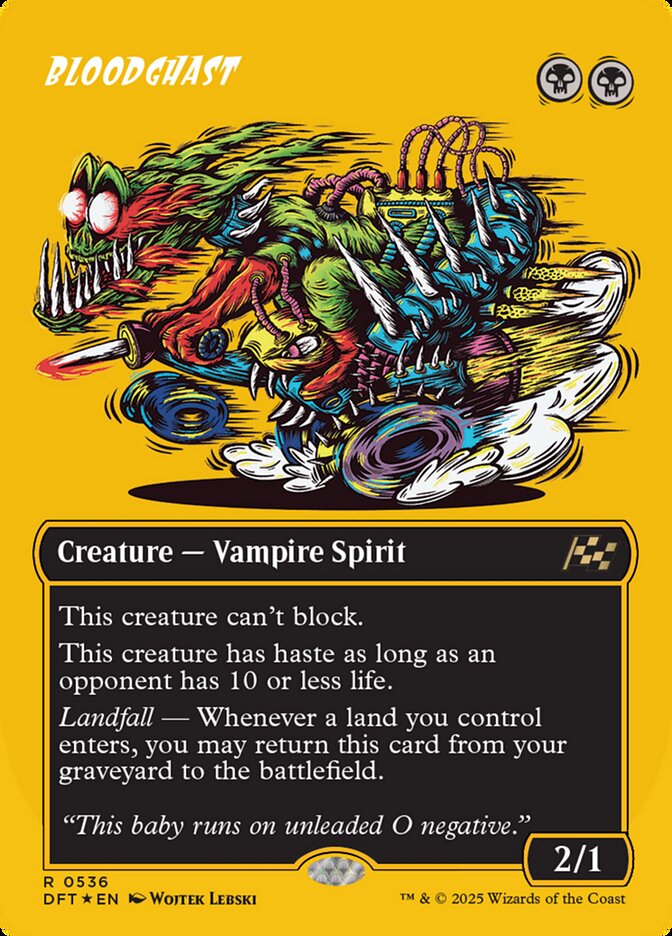
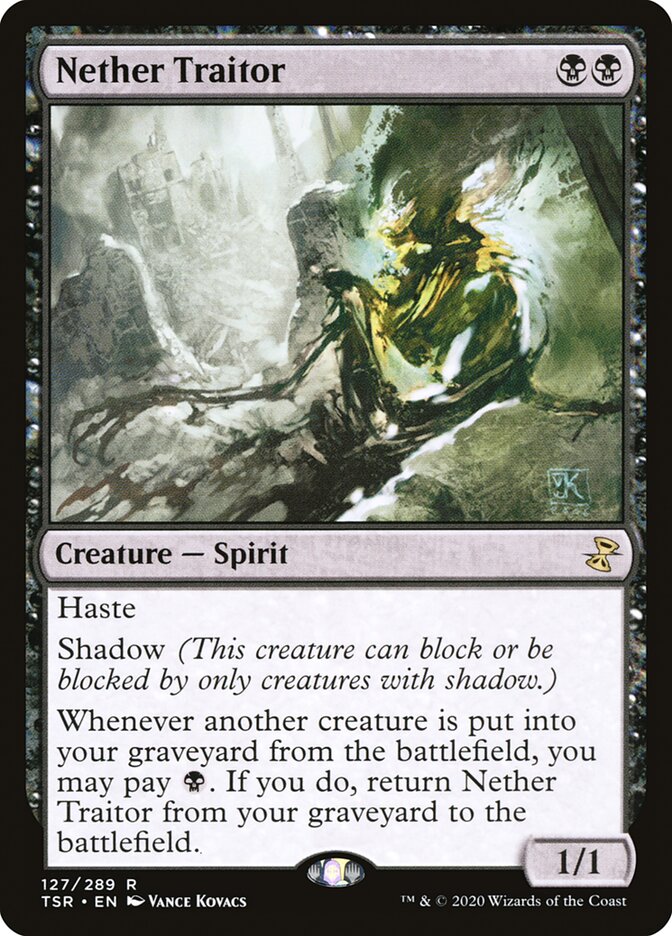
So what the deck does well is it possesses some self-recursive creatures, something that I’ve decided to capitalize on in this deck. In reality, without large bodies, Dina’s stompy plan is rather lacklustre, and furthermore, it can be expensive to play those large bodies to begin with mana-wise. The life gain and drain strategy is present, but we’ll need a lot more pieces to coherently stabilize that plan. That leaves us with one last direction, something a bit more sticky and tact which also helps draw attention away from Dina. And that’s important to note since the deck tends to fall apart without Dina on board. But with self-reanimation, we can perpetuate threats consistently on our board to eventually run over our opponents.


The goal is simple. We are going to mill targets into our graveyard and pull them out with sample cards above while bringing additional friends to the battlefield help us go wide. The fact that many of our cards are self-recurring is great since we can also sacrifice them to Dina without any worry.


We’ll be finding ways to mill our deck while maintaining advantage. The key goal is to maintain the pressure on our opponents by making our threats essentially invincible as long as they don’t have answers to our graveyard or exile-based interactions. Additionally, we can turbo-charge this mill plan if we have ways to continually discard our dredge creatures like Golgari Grave-Troll to then recycle the dredge trigger with Dina’s active ability.


In order to make sure we keep up on mana-based resources, we’ll be doing something a little bit less conventional. We aren’t going to straight up ramp in the average way that ramp is commonly conducted with small artifacts and casting ramp spells. We do have some pieces that can ramp directly, but ramp should be associated with the sacrifice synergies that we are looking to perform with Dina. Wight of the Reliquary was a wonderful addition included in the precon that perfectly synergizes with our preferred method of ramp, triggering Dina while also getting us lands. Another way we are ramping is through our graveyard using cards like Aftermath Analyst and similar cards to bring lands directly back onto our battlefield that we mill.


We need to be maximizing the value of our graveyard. Soul Enervation is great as both an active form of removal that also contributes on board as a pseudo more annoying drain, rewarding us for recurring our creatures that we’re going to do anyways. The precon provided Blight Mound and its cousin, Feral Appetite, which are excellent ways to maintain bodies on the board while also either putting pressure with anthem effects or removing our opponent’s resources. Lastly, we need some recursion pieces as well beyond our own self-recurring creatures. Defiled Crypt/Cadaver Lab is excellent as it provides both that recursion and a way to make more bodies as our creatures leave our graveyard.


Having cheap enablers like the above are equally as important to keep our graveyard stocked while also granting us forms of card advantage.


As it stands, and another thing I will compliment the precon for, is its removal suite which is not that bad. The key thing we want to note, and what makes our deck quite a bit more resilient than most is that most of our creatures return from the graveyard anyways. As long as we aren’t experiencing some exile-based wrath or deck-tucking, both of which are equally rare, our creatures are quite disposable. Mutually assured destruction is less of a massive setback and more of a hindrance at worst. So, as far as removal goes, feel free to go all out. Sacrifice-based abilities are beloved by Dina, so removing everyone’s board equally usually puts you up on advantage.


May I recommend some additional suggestions to the nice Toxic Deluge reprint? I think I should have been more clear with the previous paragraph. Mutual assured destruction is more of a necessity, especially when it gives us clear gains. Sothera is extremely evil in our deck but a great way to make our opponents think twice of blocking our annoying small pests, and granted the amount of sacrifice outlets that we are running, we can even force it out as needed at times. Nuclear Fallout is a wrath that is more so for its secondary ability, giving us rad counters so we can mill ourselves while also hurting our opponents. Flare of Malice is another edict effect which is essentially almost always free in our deck. The best thing about these types of removal is they bypass traditional protection abilities and indestructibility.
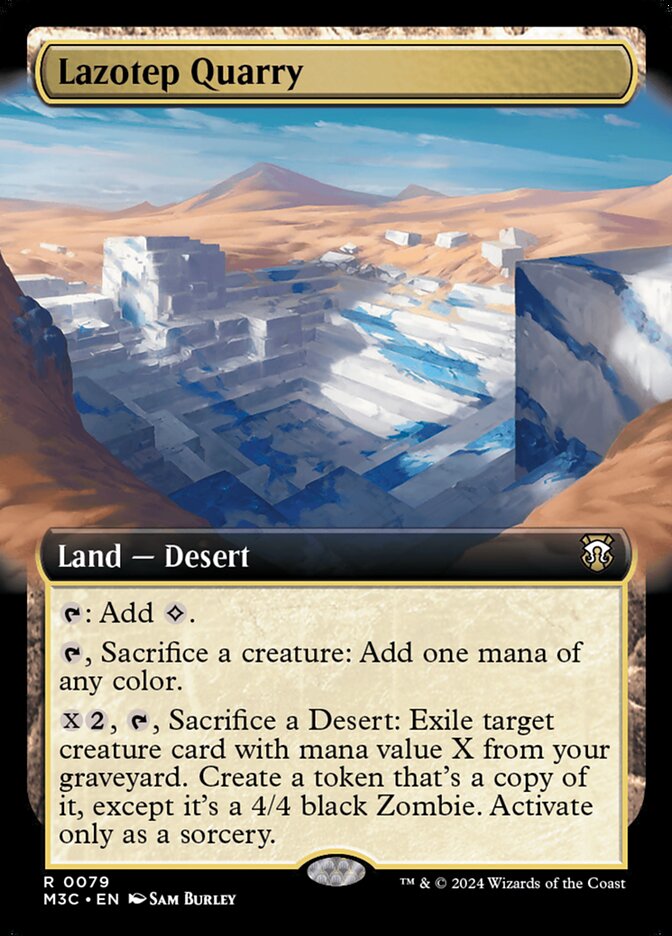

While there are some clear improvements in the lands department, we can also add these two lands above that both work to give us a much cheaper sacrifice outlet in the case of Lazotep Quarry and also a way to mill in the case of Spymaster’s Vault that also grows our creatures.
All-in-all, this would be the direction I would see myself bringing Dina moving forward. The deck shares an obvious aristocrats-style sacrifice theme, but I don’t think the current package provided by the precon is enough. There are plenty of small value-oriented creatures that give the semblance of a working plan with slow token generation and sacrifice, but we can definitely improve on this front. The lifegain strategy is middling at best with expensive pay-offs and low amounts of actual lifegain to trigger these synergies. Furthermore, there is far too much reliance on that of Dina remaining and sticking on board.
Whereas, with this deck’s modification, the goals are to move all-in on the graveyard recursion plan, constantly bringing back threats that will also partially aid in drawing attention away from Dina herself. We keep the sacrifice theme, but we move to different cards to actively accelerate and fill our graveyard with resources for later turns. We make sacrifice less of purely an advantage generating key-point and turn it into a deadly recipe for success. Doing what Golgari, and essentially what Witherbloom does best, we draw from the roots of the dead and bring back our team over and over again.
Sample Decklist:
Dina, Modified