
It is 2026, and Magic the Gathering has gone back again to the mystical world of Tolkien with high fantasy once more. This time, however, we are going back deeper into the past, far before the famous story of The Lord of the Rings took place. Before Frodo and Sam exit their hobbit hole for the first time to make the delivery of the magical ring to the burning hells of Mount Doom from which its magic was crystallized into physical form, there was another, tasked to go on a different adventure. Bilbo Baggins, the uncle of Frodo, joins Gandalf and a company of dwarves as they seek to find and reclaim their homeland from a wicked dragon.


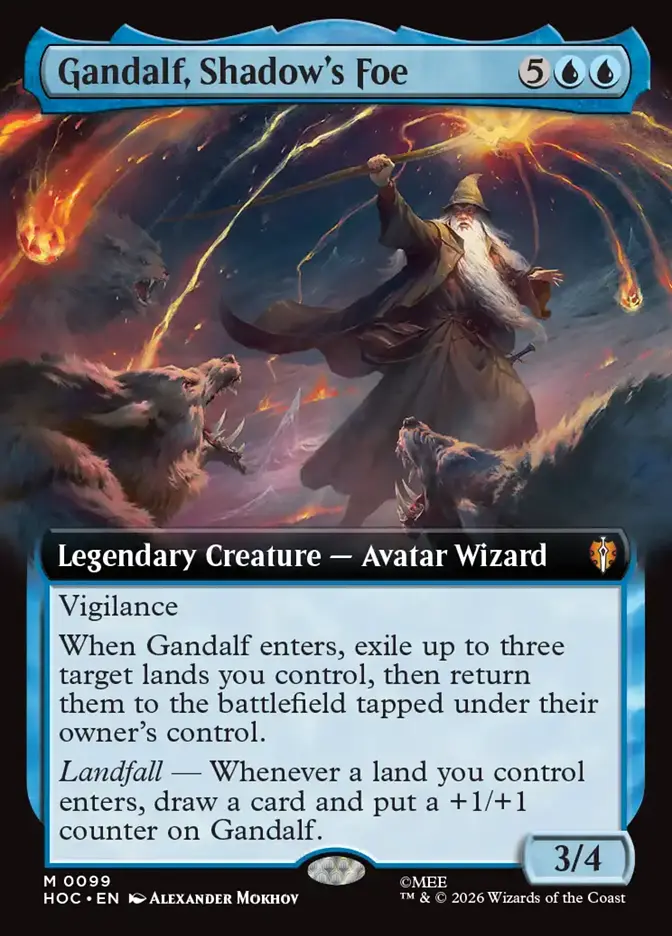
The products themselves show snippets of the story of its characters through both visual references and quotes embedded within the cards themselves. The main set for the Hobbit is not a half set (no pun intended) but a smaller set than your modern average. It is a mix of several legendary creatures, named individuals from the series, and other magical and fantastical elements and beings that exist within that world.
Aside from the main product, there are a few supplementary items along with a fresh reprint of older cards from the original Lord of the Rings set in box toppers.
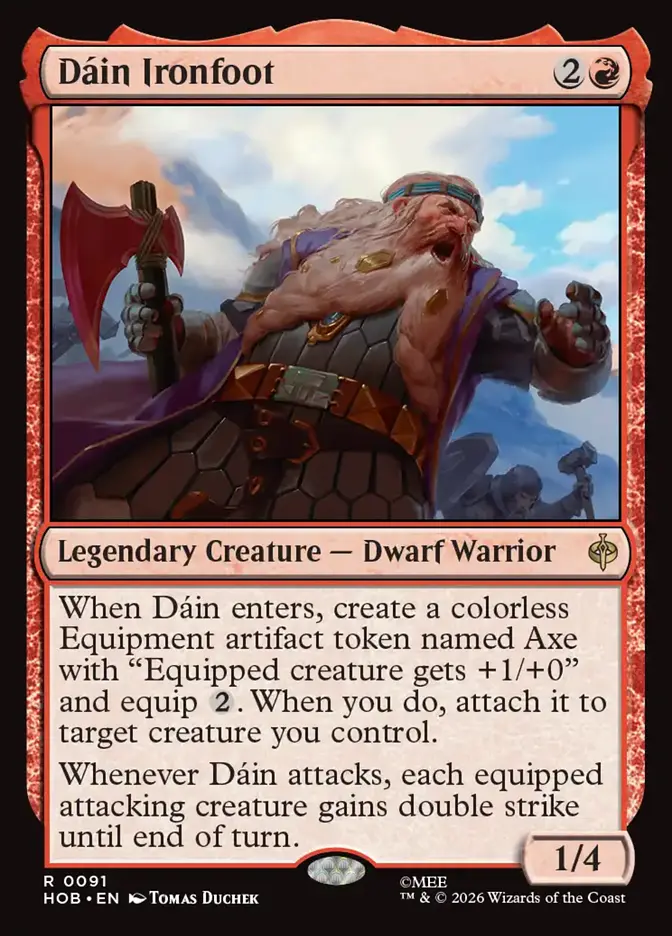
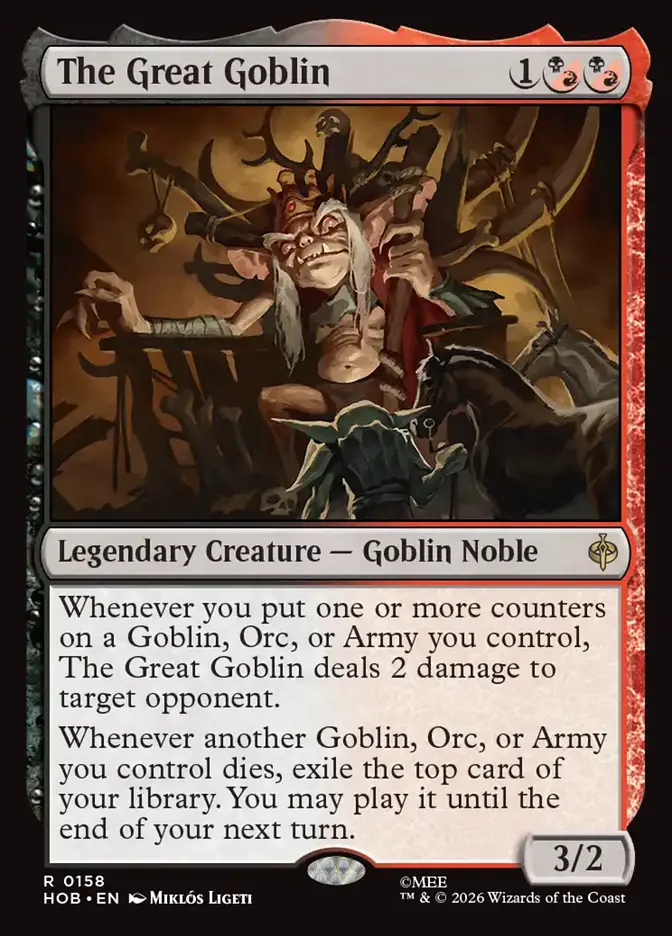
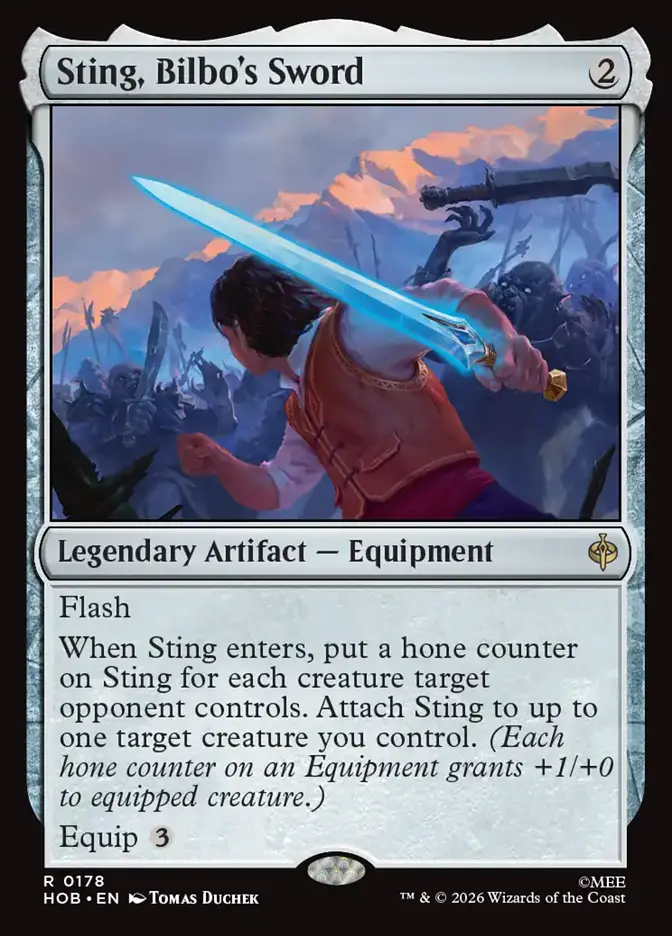
The set isn’t that heavily focused on any specific archetype. It is plenty filled with all manners of magical and mystical beings with a variety of different card types that are not inherently linked to one another. However, there is a bit of an emphasis on two main tribes being that of dwarves and goblins/armies. Dwarves have been given quite a bit of a boost and now an established identity (at least in the context of Middle-Earth) in terms of being warriors that are obsessed with weapons (equipment). As is true to their nature in the story, the dwarves are in search of gold in the Misty Mountains. They are equipped and ready to go on their crusade to claim back their homeland, readying their steel and tools.
Goblins, on the other hand, are part of the enemy forces in the story and have not really changed from their roots. They have some combination of support and mixed usage with that of the “army”, a returning mechanic from the original Lord of the Rings. They have also had more of a push and dive into the black colour, not necessarily new for goblins, but a shift away from their typical red colour.

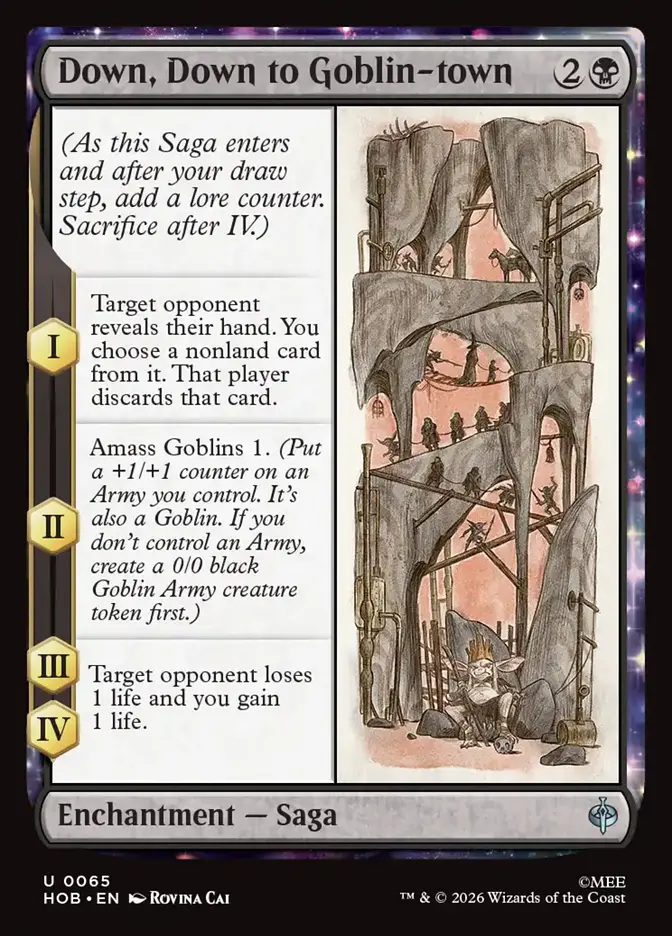

A quick reminder for veterans and a short explanation for the “army” mechanic is shown above. Essentially, certain spells will direct you to create a specific token above. This token, if already existing on the field itself when the keyword is triggered, will gain counters in the form of +1/+1 rather than creating a new body on the board. You are free to use this token as a creature, block with it, sacrifice it, etc. Upon it’s removal from the board, any ability or trigger that asks to create an army will generate a new token.
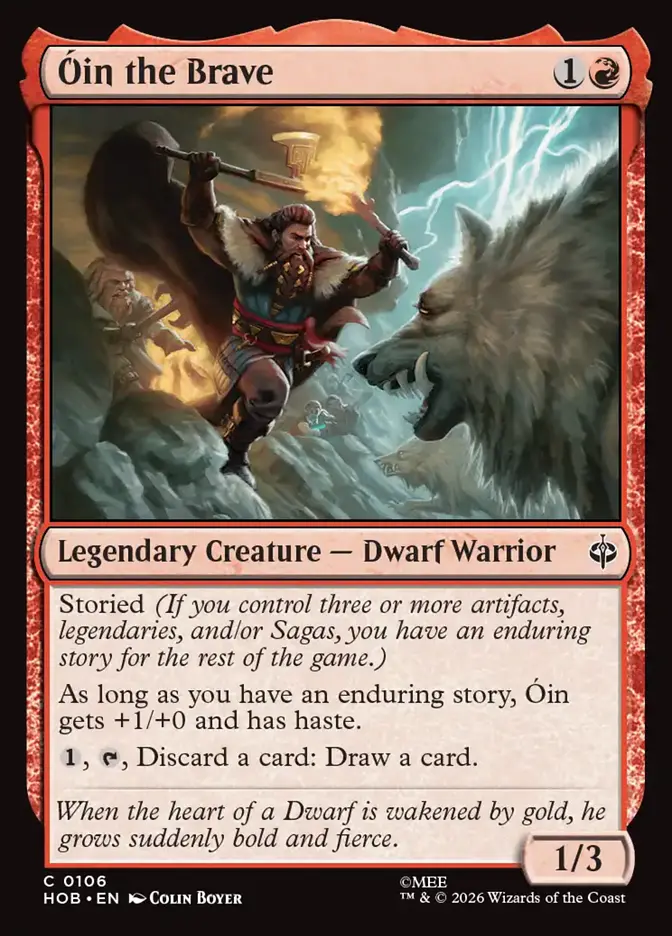


Dwarves are introducing a new mechanic named “Storied” which gives you the emblem of “Enduring Story” used for their own exclusive effects. The “Storied” mechanic is reminiscent of that of something like “Ascend” which checks for a condition and you have it for the rest of the game. Storied is a simple check that provides you an emblem requiring at least three or more of any mix of the following: artifacts, legendaries, and/or sagas. Do note, the artifacts and sagas do not have to be legendary, meaning, you can easily accomplish the condition with say, three treasure tokens.
Dwarves are here to hit mean, hard, and fast. Newer equipment often struggle with adapting to modern play due to their biggest inherent weaknesses: needing a body and having to pay to equip at sorcery speed. This is overcome with many dwarves having the ability to equip cards themselves or with many equips having better on-play effects/different play timings. Dwarves, while many seek out equipment, are not exclusively tied to that sub-type and are able to also find some of their brethren as well. Their formula is rather simple: get a dwarf, give it an axe, and smack your opponent.


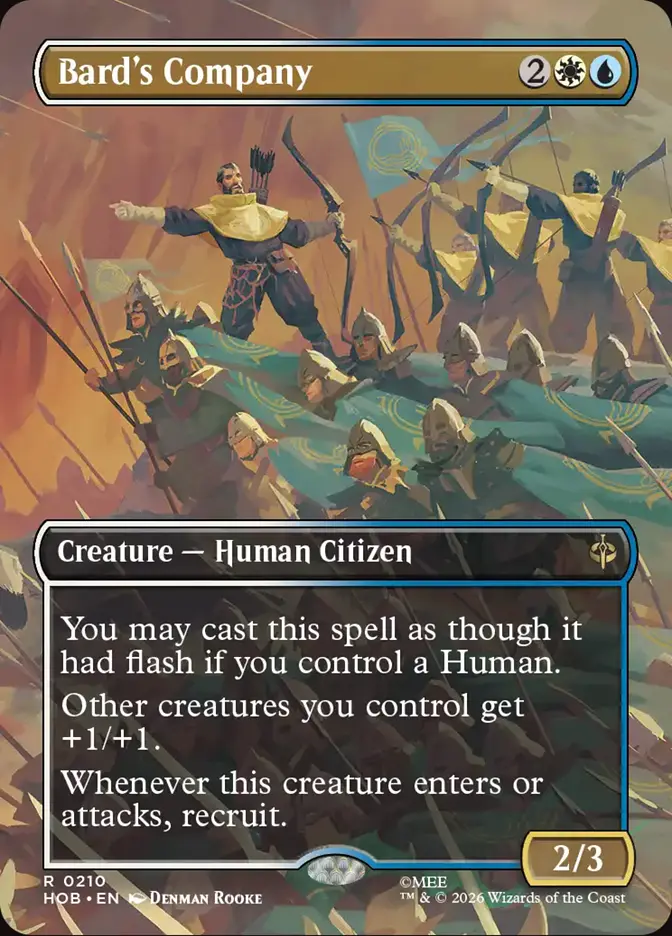
One other new mechanic is that of “recruit”, essentially a spin on “connive”, which, instead of giving your creatures +1/+1 counters, it creates you a small 1/1 white human soldier creature token. In essence, when you recruit, you are able to filter your hand and also amass some smaller army. Keep in mind that you must discard nonland cards to get the token. Similar to connive, this type of ability works best with cards that you can later make advantage of from your graveyard. In a callback to older formats and cards, “flashback” and targets for reanimation are a great option for this. As we speak though, the mechanic seems limited to Azorius colours.

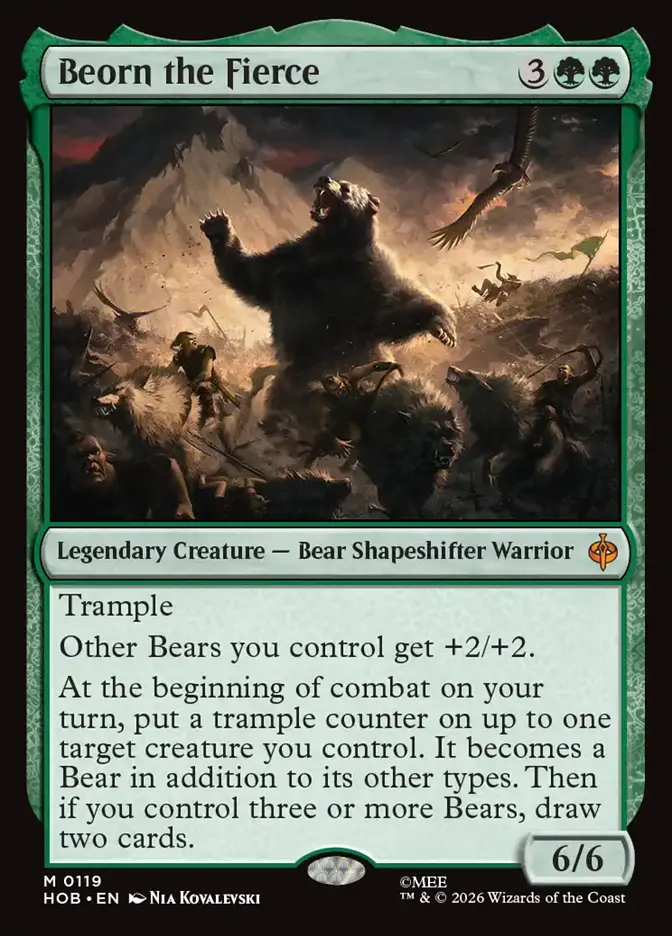

There are some minor tribes with some adjustments and changes as well. Wolves, in particular, have many that share a focus on the “ferocious” keyword where they want to be big and will give you advantages for being big. Bears have a return with some exclusive bear support. Elves are here as well, as is an essential core of Middle Earth, and have additional entries into the blue colour.
Personally, I really like the nod-offs to Tolkien’s lore. Many of the creatures, while sounding quite dull on paper, such as Gigantic Big Bear or Great Fierce Bee, really do reference Tolkien’s work and the ways in which its characters describe and explore the world around them. I really enjoy the twist and changes to how dwarves function in Middle Earth and it really does feel as if the team behind this design truly understands and cares about the lore within that world. I’m curious to see how builds will change across all formats in Magic, especially with how the dwarves may work with equipment from beyond their singular world.