
In reference to the newly released cycle of plans from the Marvel Universe set, I’ve decided to make this write-up in comparison to an older cycle of enchantments that share a similar ability. Beginning in all the way back in original Zendikar in 2009, the quest cycle below were a set of enchantments that had you perform “arduous” tasks to get specific payoffs.
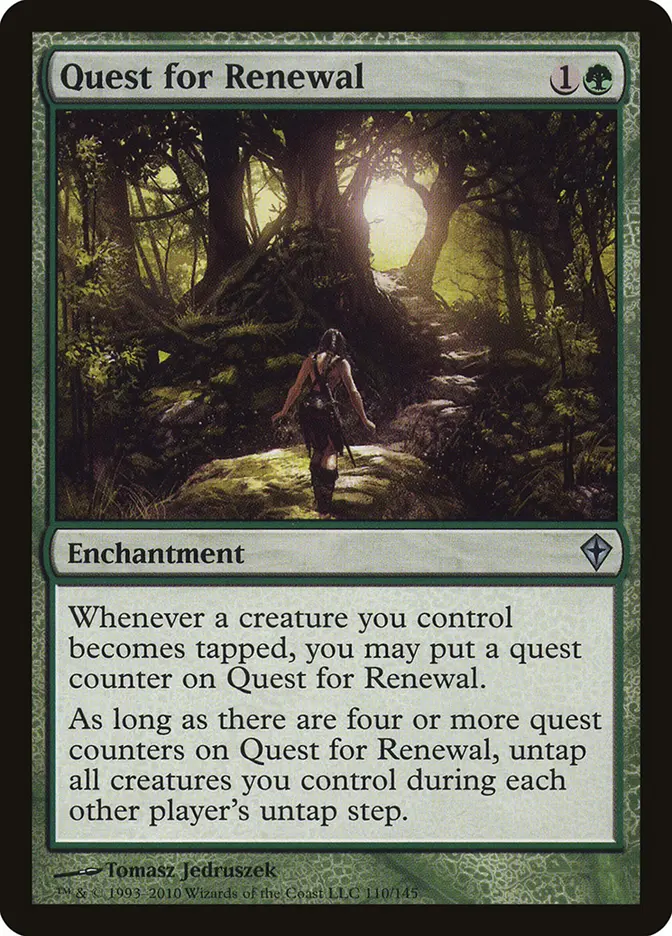
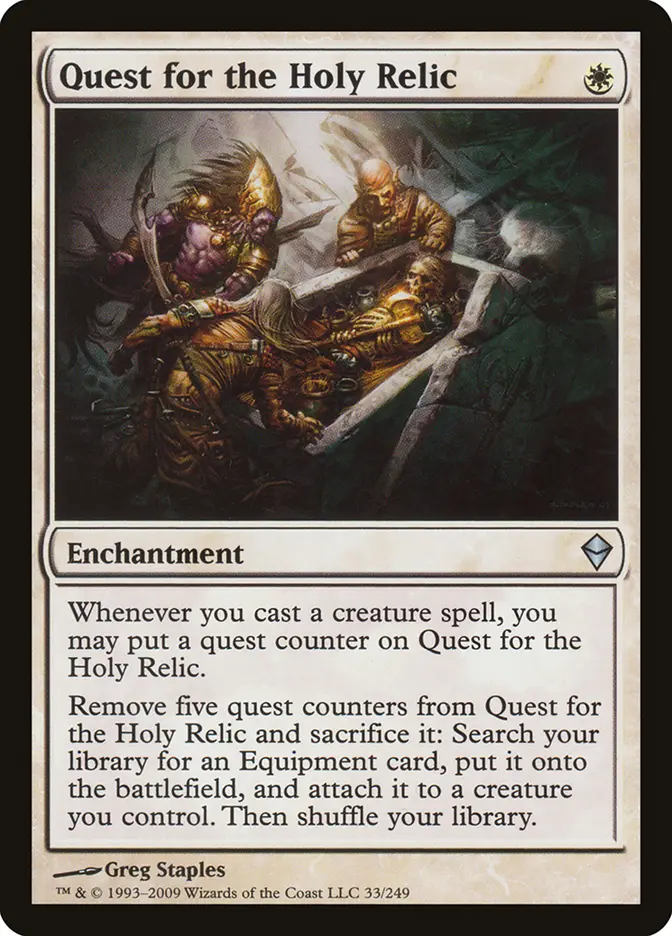
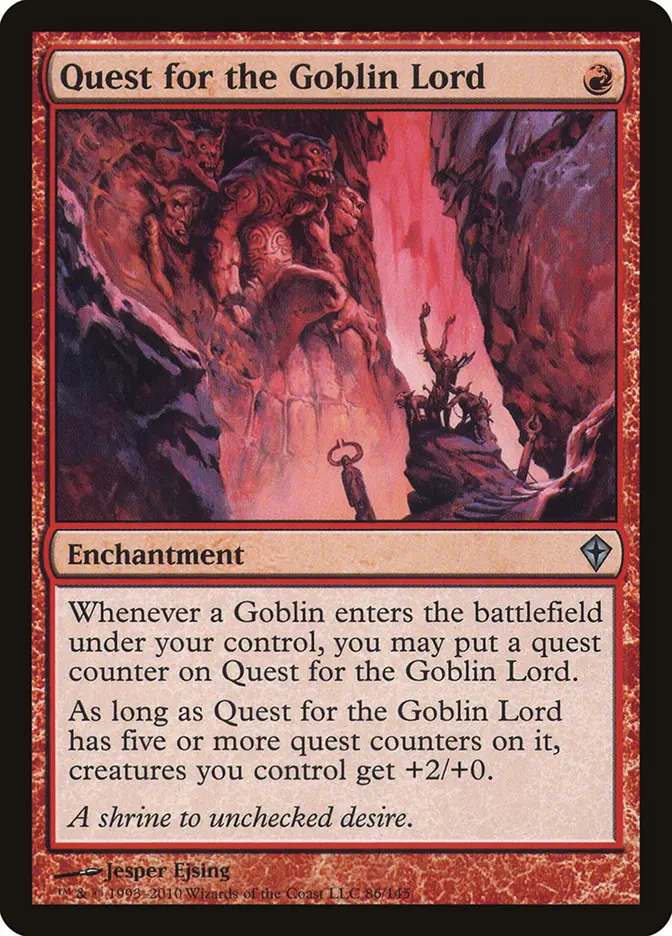
To put it simply, the quest cycle depicted an exploration of sorts on all the cards where characters would be seeking out some type of treasure or deeper purpose. Each time you performed a specific action, the quest enchantment would gain a quest counter in response. And upon reaching a certain number of quest counters, the quest would be “complete” and you would get a reward based on the specific enchantment. However, the quests were not all made equal. Some quests were far easier to achieve while others required specific build requirements. Furthermore, some of the quests would sacrifice themselves whereas others remained on board and would provide global buffs to you or your board.
The cycle could also be most notably cheated with “proliferate” effects thanks to the fact that it gained counters. Generally speaking, you’d like to accelerate the counters as fast as possible to receive the grand reward at its end since there was no value in putting counters on these cards specifically. As long as you achieved the required amount of counters, the card would be alive with its ability and that was it.


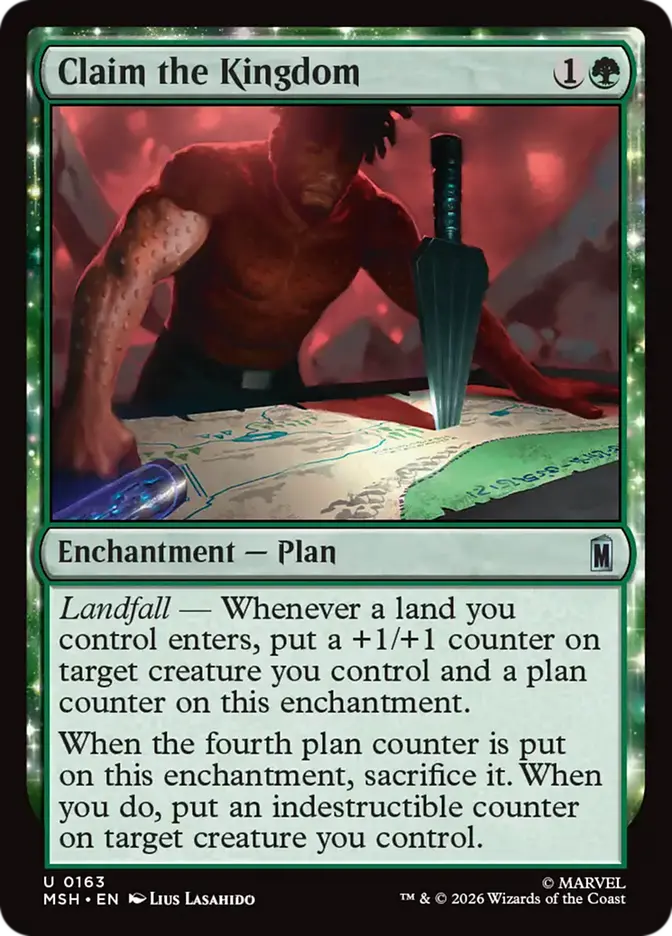
However, with the release of the most recent Marvel set, we have the rise of the “plans” which are a sub-type for enchantments. They act similarly to the quest cycle from Zendikar, but, like some of the quests, they will actively sacrifice themselves once they meet their counter requirements. Unlike some of those quests, however, you cannot choose when to pop these enchantments since they will automatically sacrifice themselves the moment they reach the specific counter number. These cards embody the villain spirit in carefully articulating strategies and plans through nefarious preparation for a plot and slowly stacking counters for the ultimate surprise at the end. Unlike the quest cycle though, these cards do not actively encourage you to proliferate their counters as they provide additional value for seeking completion of their tasks.
That is to say, you are rewarded for the journey in addition to the final reward at the end comparatively to the old quest cycle. In essence, I would like to say that, in terms of mechanical gameplay, these plans genuinely give far more purpose and encourage active gameplay far more than that of their predecessors. While the previous cycle just wanted to speed through and complete the journey as fast as possible, you are encouraged to take it slow and move at your own pace here with these plans above. Each counter you gain for performing a task gives you an additional reward. Proliferating the counters actively ignores all these rewards and pushes you towards the end, leaving you out of the value gained from actively adding counters.
In retrospect, in some cases, it may even be preferable to ignore the final reward entirely and just focus on constantly completing the aforementioned tasks on the cards for the mini-rewards if possible. Of course, this takes a bit of nuance.

If you have an effect like the card above, you can just perform the task listed on the plan and get the counter’s reward without actively getting a counter, meaning that you can infinitely perform said task and get infinite rewards. Of course, you also have the option to just proliferate right away and instantly pop the enchantment for that nice final plan reward if you need to like the older quest cycle from Zendikar.
Personally, I just think these plans are cool and fun. Furthermore, you can also actively work with your friends (and enemies) to potentially push your plans ahead if you know what I mean.